Homeowners
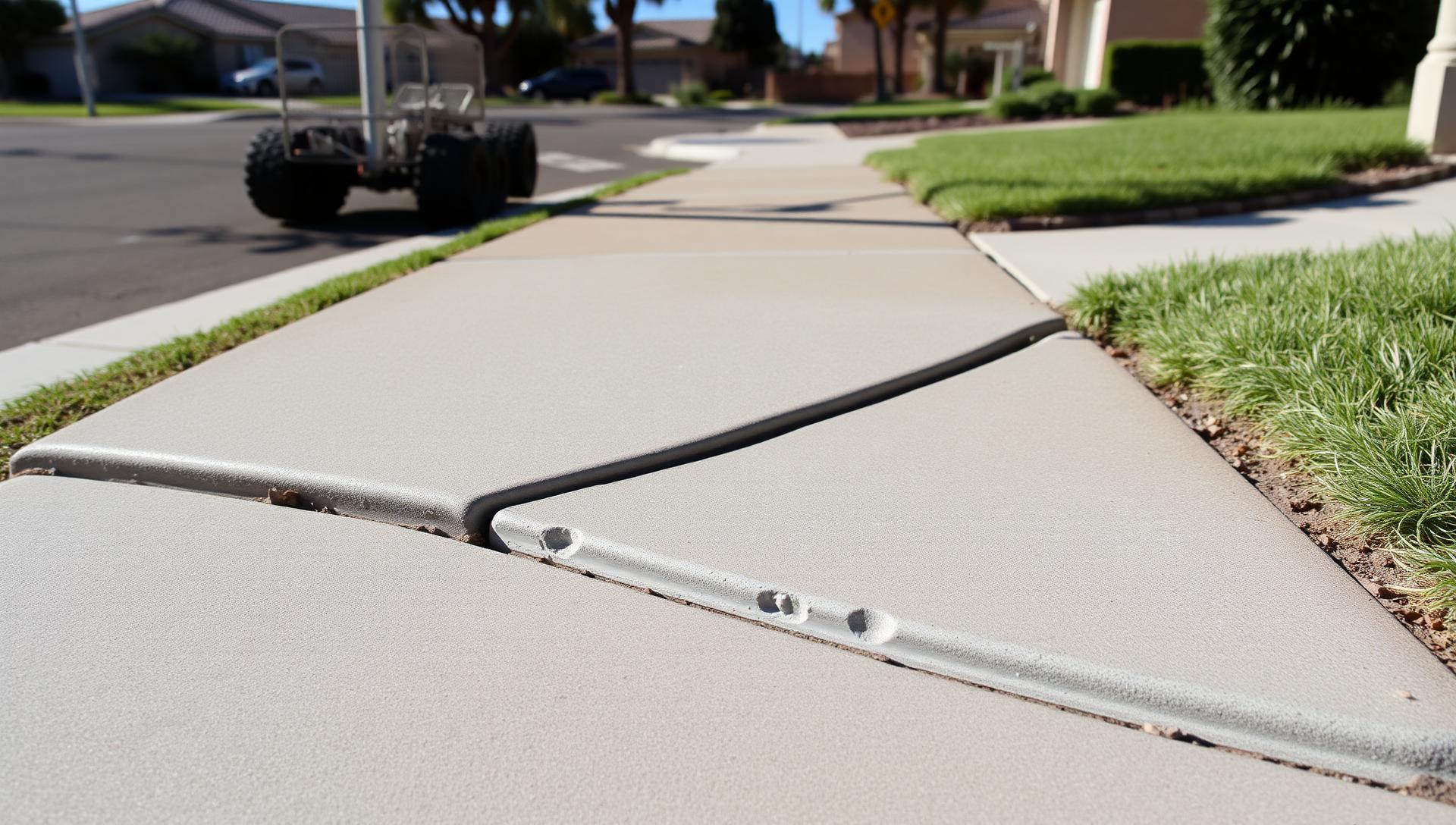
A raised sidewalk panel at the front walk, a heaved driveway seam, or a patio edge that catches a toe. One machine, one visit, usually a couple of hours — no demo, no forms, no new concrete curing across your entry for a week.
Las Vegas • Henderson • North Las Vegas
Reduce trip hazards on sidewalks, driveways, patios, and pool decks by grinding the offset flat — usually in hours, without replacing the concrete.
Licensed
NV contractor license
Insured
General liability + WC
Dust-Controlled
Shrouded + HEPA filtration
15+ Years
Valley-wide floor prep
Who we work for
The machine is the same; the logistics and documentation are what change. Tell us which of these you are and we'll scope it accordingly.
A raised sidewalk panel at the front walk, a heaved driveway seam, or a patio edge that catches a toe. One machine, one visit, usually a couple of hours — no demo, no forms, no new concrete curing across your entry for a week.
Community walkways, mail-station approaches, and pool deck perimeters where root heave and settlement have created lips across dozens of panels. We walk the property, mark and count every location, and grind them in a single scheduled mobilization.
Apartment breezeways, stairwell landings, parking-lot walkways, and tenant entries. Documented before-and-after per location so you have a record for ownership and your insurance file.
Storefront entries, warehouse thresholds, loading dock aprons, and interior slab transitions. Work is scheduled off-hours so customers and operations aren't walking through the job.
Identify it
Any abrupt change in walking-surface elevation is a hazard, and it doesn't take much. These are the conditions we're called out for most often across the Las Vegas valley.
Adjacent panels settle at different rates or get pushed by tree roots until one sits proud of the next. Anything from a quarter inch up starts catching shoes, walkers, and stroller wheels.
Soil movement and root pressure lift driveway sections and gutter aprons. Grinding a heaved section flat is often the difference between a usable driveway and a full tear-out.
Patio slabs pulling away from the house, uneven step nosings, and door thresholds that have shifted out of plane. These are high-traffic, low-light spots where a small lip does real damage.
Wet feet and bare toes make a pool deck the least forgiving surface on a property. Deck panels around skimmers and expansion joints commonly lift and are ground flat with a smooth, non-slick finish.
Warehouse joints, garage-to-house steps, and floor transitions that opened up as the slab moved — ground down with dust-controlled equipment so an occupied space stays usable.
Common in older Las Vegas neighborhoods and established HOA landscaping. Grinding addresses the surface; where the root will keep lifting, we'll say so instead of selling a repeat visit.
Compare the options
Grinding isn't always the answer — but on sound concrete with a vertical offset, it's faster, cheaper, and far less disruptive than tear-out and repour.
| Factor | Trip hazard grinding | Remove & replace |
|---|---|---|
| Typical timeline | Hours — most locations finished the same day | Days to weeks with demo, forms, pour, and cure |
| Relative cost | A fraction of replacement per location | Highest cost option; scales fast across many panels |
| Disruption | Walkway stays usable immediately after grinding | Area fenced off through demo and full cure |
| Dust & debris | Dry, dust-controlled with shrouded equipment and HEPA filtration | Demo debris, hauling, and concrete truck access |
| Appearance | A ground band with a slightly different texture; blends with age | A bright new panel that stands out against weathered concrete |
| Best suited for | Vertical offsets, lips, and high spots on otherwise sound concrete | Badly spalled, cracked, or structurally failed slabs |
| Landscaping impact | None — no excavation | Access damage to turf, irrigation, and beds is common |
General comparison for planning. Cost and timeline depend on site access, offset size, and the number of locations — pricing is quoted after a walkthrough.
Our process
We walk the property with you, measure each offset, mark and number every location, and flag anything that grinding can't solve — a spalled or structurally failed panel gets called out as replacement, not ground and forgotten.
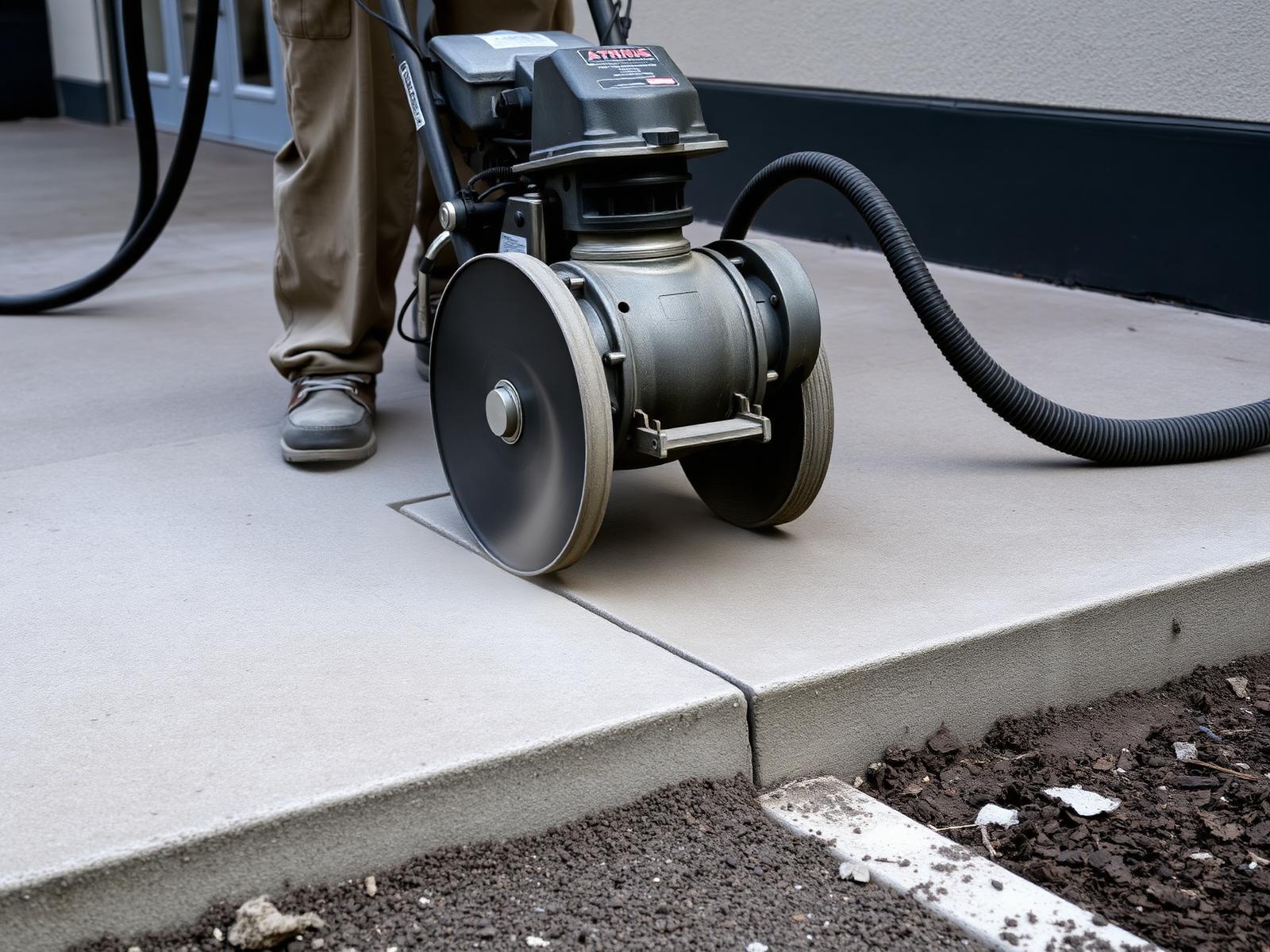
The high side comes down with diamond tooling on shrouded equipment tied to HEPA vacuum extraction. We cut a tapered transition rather than a sharp step so the change in elevation is walked over, not tripped on.
Edges are feathered out and blended into the surrounding slab, and the ground surface is left with texture rather than polished slick — important on pool decks and any exterior walkway that gets wet.
Dust and fines are vacuumed as we go and the area is left broom-clean and immediately walkable. For HOAs and managers we document each numbered location before and after.
For HOAs & property managers
Mobilization is a real share of the cost on a single lip. Across forty of them it's noise — which is why a community-wide grind almost always prices better per location than calling us out one hazard at a time.
We walk the property with your manager or board member, measure and number every offset, and hand back a marked log you can take to the board.
Locations are priced as a package rather than as individual service calls, with tiers as the count grows across phases or buildings.
Photos per numbered location for your records, ownership reporting, and insurance file.
Off-peak and off-hours work, no excavation, no landscaping damage, and walkways usable again the same day.
FAQ
Free estimate
Reduce the trip hazards before someone finds them
Send the address and how many locations you're seeing — homeowners get a quick quote, HOAs and managers get a full hazard walkthrough.